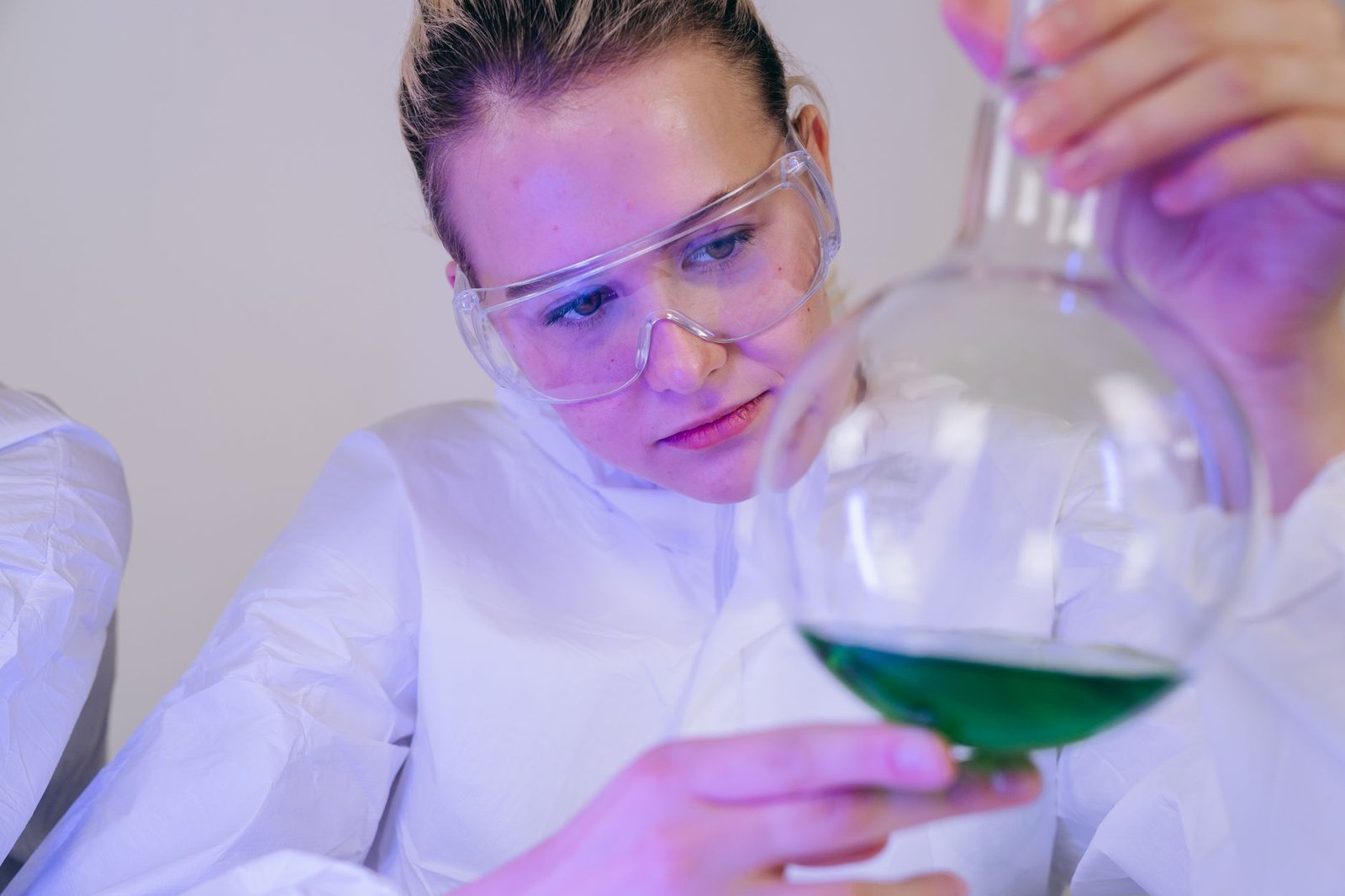
When founders ask me how to create custom skincare line products that actually perform, I tell them to start with emulsion chemistry rather than marketing claims. Building a skincare brand requires turning your vision into a stable, effective liquid or emulsion system that can be consistently manufactured. At Formyoule, we guide indie founders through this precise technical journey from raw ingredient selection to final production.
- Formula Ownership: Developing custom formulations ensures your brand owns 100% of its intellectual property and ingredient architecture.
- Colloidal Chemistry: Choosing the right emulsifiers and humectants directly controls tactile feel, skin absorption, and product stability.
- Mandatory Testing: Accelerated stability and microbial challenge testing safeguard your brand against phase separation and batch contamination.
- Small Batch Scale-Up: Manufacturing in small runs starting at 250 units minimizes financial risk while validating market demand.
Defining Formula Architecture and Target Sensory Profile
Before pouring raw materials into a lab beaker, a cosmetic chemist must define the physical framework of your product. Are you building an oil-in-water emulsion for a lightweight moisturiser, a water-in-oil system for heavy barrier repair, or an anhydrous gel for a facial serum? The choice dictates every raw material that follows.
We look closely at your target sensory profile. You might want a fast-absorbing serum with zero tackiness. That requires careful humectant selection. Glycerin provides deep hydration but can feel sticky at higher percentages. We often balance glycerin with propanediol, sodium PCA, or low molecular weight sodium hyaluronate to achieve hydration without heaviness.
Emulsifiers determine both long-term colloidal stability and skin feel. Non-ionic emulsifier blends like cetearyl glucoside and cetearyl alcohol create structured lamellar gel networks. These lamellar phases mimic natural skin membrane lipids, enhancing barrier support and delivering a smooth application. The goal during this early stage is to align your visual brand expectation with sound physical chemistry.
Steps to Create Custom Skincare Line Products in the Lab
Once the product architecture is clear, active formulation begins in our Toronto facility. Developing a formula from scratch involves balancing active ingredients with functional excipients. Active raw materials like L-ascorbic acid or niacinamide require specific pH environments to remain active without causing irritation.
For instance, pure L-ascorbic acid requires a low pH below 3.5 to penetrate the stratum corneum. However, this acidic environment can cause skin irritation and rapid oxidation in the bottle. We often formulate with stabilized derivatives like sodium ascorbyl phosphate or ethylated ascorbic acid. These derivatives maintain performance across a neutral pH range while preventing the product from turning brown on the store shelf.
Lipid selection dictates barrier support and oil behavior on the skin. Plant oils like jojoba, squalane, and rosehip contain varied fatty acid profiles. Linoleic acid rich oils suit acne prone skin, while oleic acid rich oils benefit dry skin types. We combine these with lipid antioxidant systems such as tocopherol and sodium phytate to prevent rancidity over time.
If you want dedicated formulation support without needing a degree in biochemistry, exploring our custom formulation services is the logical starting point. You bring the vision. We handle the science.
Stability, Compatibility, and Safety Testing
A formula that looks ideal on day one can fail after three weeks on a retail shelf. That is why rigorous testing is mandatory as you create custom skincare line formulas for commercial distribution.
Accelerated stability testing subjects product samples to elevated temperatures, typically 40°C and 45°C, alongside multi-cycle freeze-thaw testing. This environmental stress accelerates physical changes. It exposes potential phase separation, syneresis, viscosity drops, or colour shifting. If an emulsion breaks under heat, we adjust hydrocolloid thickeners or tweak emulsifier ratios.
Preservation is equally critical for consumer safety. Water-containing formulas require broad-spectrum preservation against bacteria, yeast, and mould. Organic acid systems using benzoic acid or sorbic acid work effectively below pH 5.5. For higher pH formulations, we utilize alternative broad-spectrum systems such as phenoxyethanol paired with ethylhexylglycerin.
Microbial challenge testing, known as USP 51 or ISO 11930, proves your preservative system actively neutralises introduced microorganisms over a 28-day period. Packaging compatibility testing verifies that the liquid product does not degrade pump mechanisms or leech chemicals from plastic container walls.
Manufacturing Scale-Up and Small Batch Execution
Moving a formula from a 500-gram lab beaker to a 100-litre stainless steel tank introduces physical variables. Lab mixers deliver high localized shear, whereas large manufacturing vessels rely on industrial agitators and inline homogenizers.
During scale-up, cooling rates and mixing speeds must be controlled with precision. Cool an emulsion too fast, and large wax crystals can form, ruining the texture. Cool it too slowly, and the final viscosity may drop below specification. Understanding our step-by-step formulation and production process helps founders anticipate how lab prototypes transition into commercial batches.
Many large contract factories demand minimum order quantities of 5,000 to 10,000 units per run. That forces new brand owners to tie up working capital in unproven inventory. At Formyoule, we manufacture in small batches starting from 250 units. The same team that formulates your product oversees batching, filling, and quality control. This direct oversight minimizes production risk and maintains exact formula integrity.
Choosing Your Development Pathway
Founders often evaluate three main paths when preparing to launch: white label, stock tweaking, or true custom formulation. The right choice depends on your budget, timeline, and long term brand goals.
| Development Route | Formula Ownership | Customization Level | Minimum Order Quantity | Ideal Founder Profile |
|---|---|---|---|---|
| White Label | Manufacturer owns formula | None (Pre-set ingredients) | 500 to 1,000 units | Founders testing simple concepts quickly |
| Stock Base Modification | Manufacturer owns formula | Minor scent or extract tweaks | 500 to 2,000 units | Slight differentiation on existing bases |
| Custom Formulation (Formyoule) | Brand owns 100% IP | Completely custom from scratch | Starting from 250 units | Founders building original, defensible brands |
Owning your full formula IP gives your brand genuine commercial value. If you ever decide to scale production or seek investors, owning your trade secrets is a major asset.
Regulatory Compliance and Market Readiness
Before selling your finished goods, regulatory compliance must be verified. In Canada, every cosmetic product offered for sale requires a notification submitted to Health Canada within 10 days of first sale. You can review exact regulatory requirements on the official Health Canada Cosmetic Notification Form requirement page.
For brands selling into the United States, compliance with the Modernization of Cosmetics Regulation Act (MoCRA) is mandatory. MoCRA requires facility registration, product listing, safety substantiation, and adverse event tracking.
Label compliance is another critical milestone when you create custom skincare line products for retail. Canadian packaging requires bilingual text in English and French. Ingredient lists across North America must use International Nomenclature Cosmetic Ingredient (INCI) names listed in descending order of concentration. Making disease or drug claims transforms your cosmetic into a pharmaceutical, triggering complex regulatory burdens.
Your Next Steps to Commercial Production
Building a successful skincare brand requires clear vision, sound biochemistry, and a manufacturing partner who treats your product with technical precision. When you bring your concept to our Toronto lab, we turn your raw ideas into shelf-ready formulas engineered for long term stability and scale. Focusing on proper chemistry today gives your brand the performance foundation it needs to thrive.
Ready to create your custom skincare line?
You do not need a lab of your own to create a custom skincare line. From the first formula to a finished, labeled product, our team handles the chemistry, the stability testing, and the small batch manufacturing, so you can focus on your brand. If you are ready to create a custom skincare line this year, start your project and we will help turn your idea into a shelf-ready product.